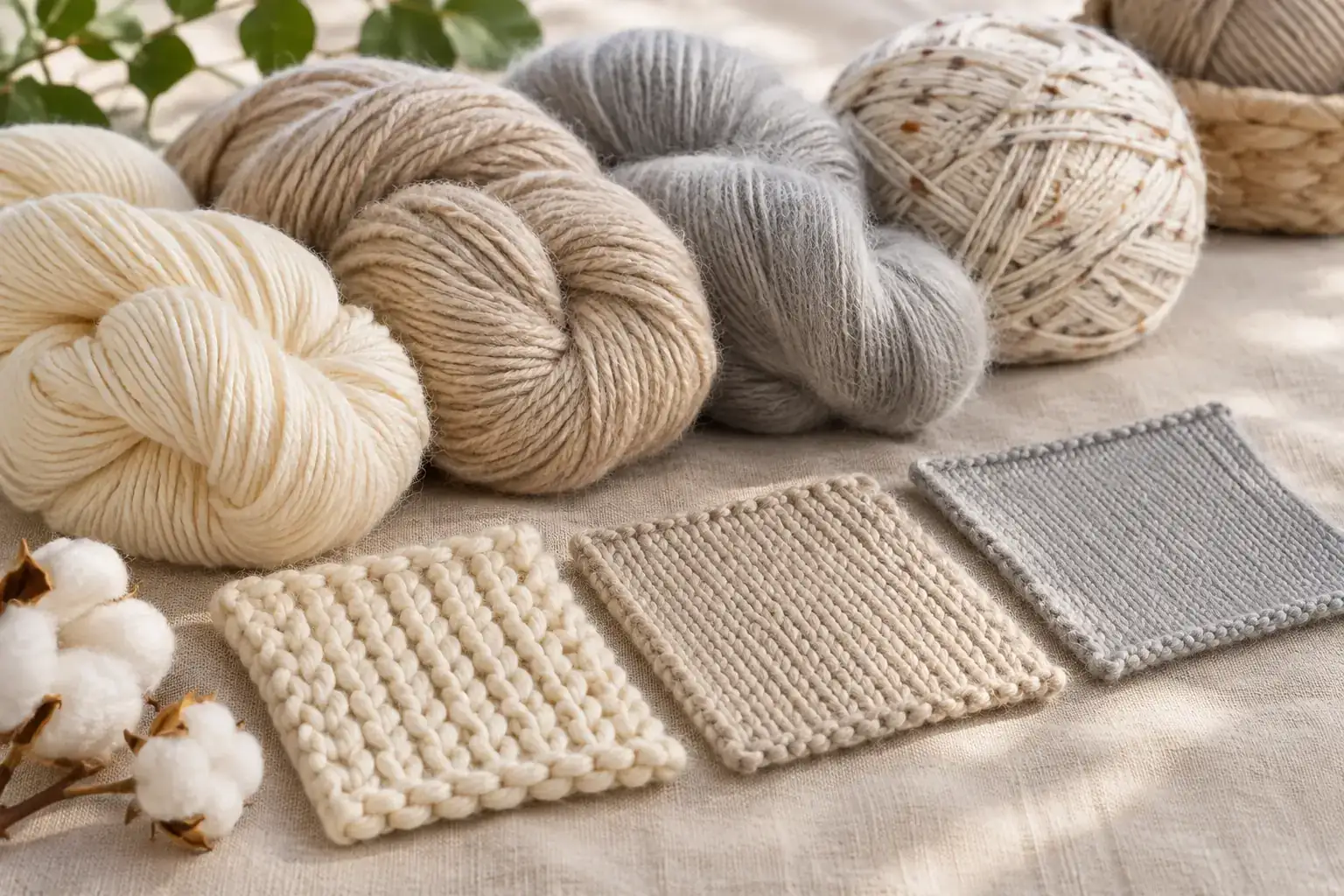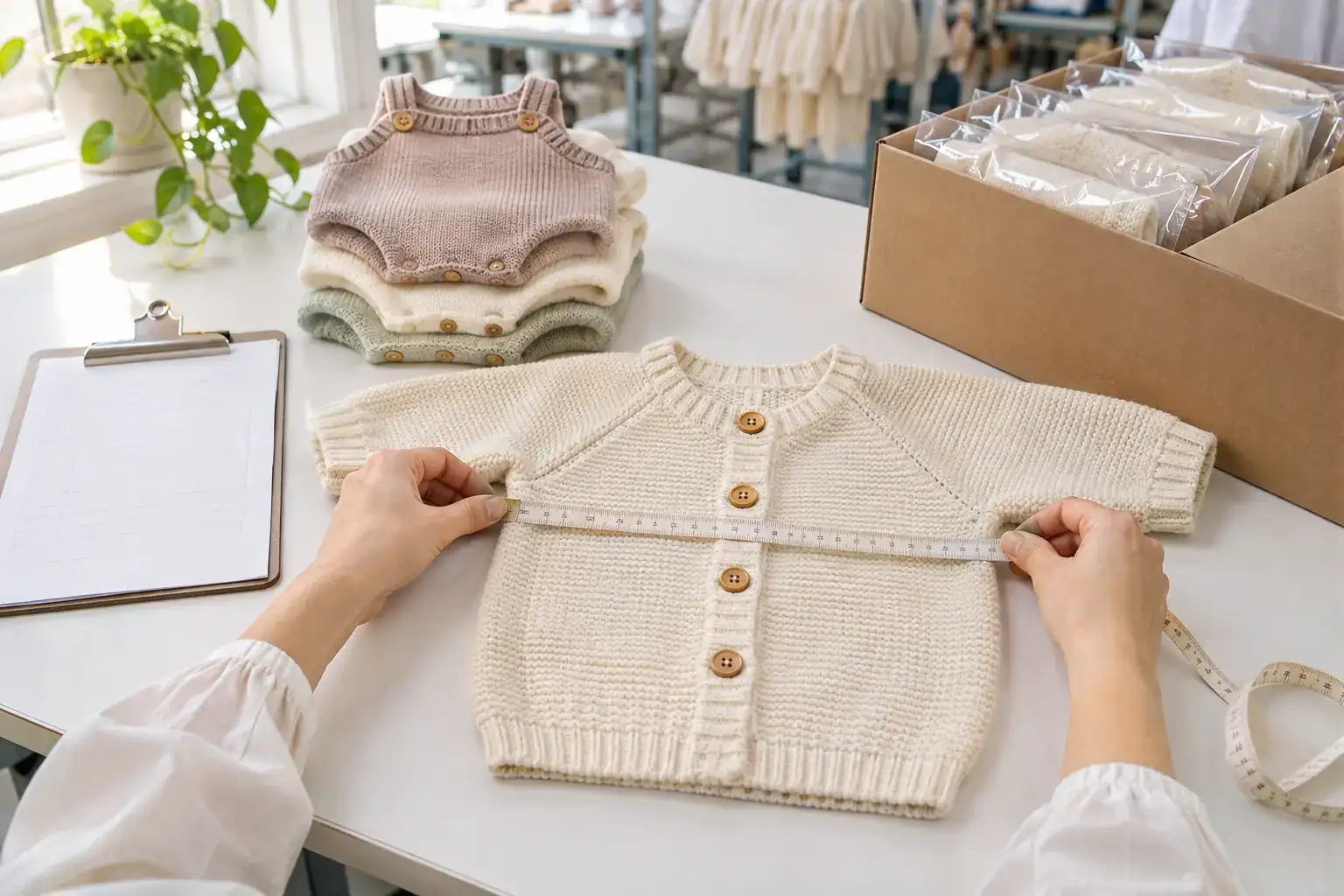
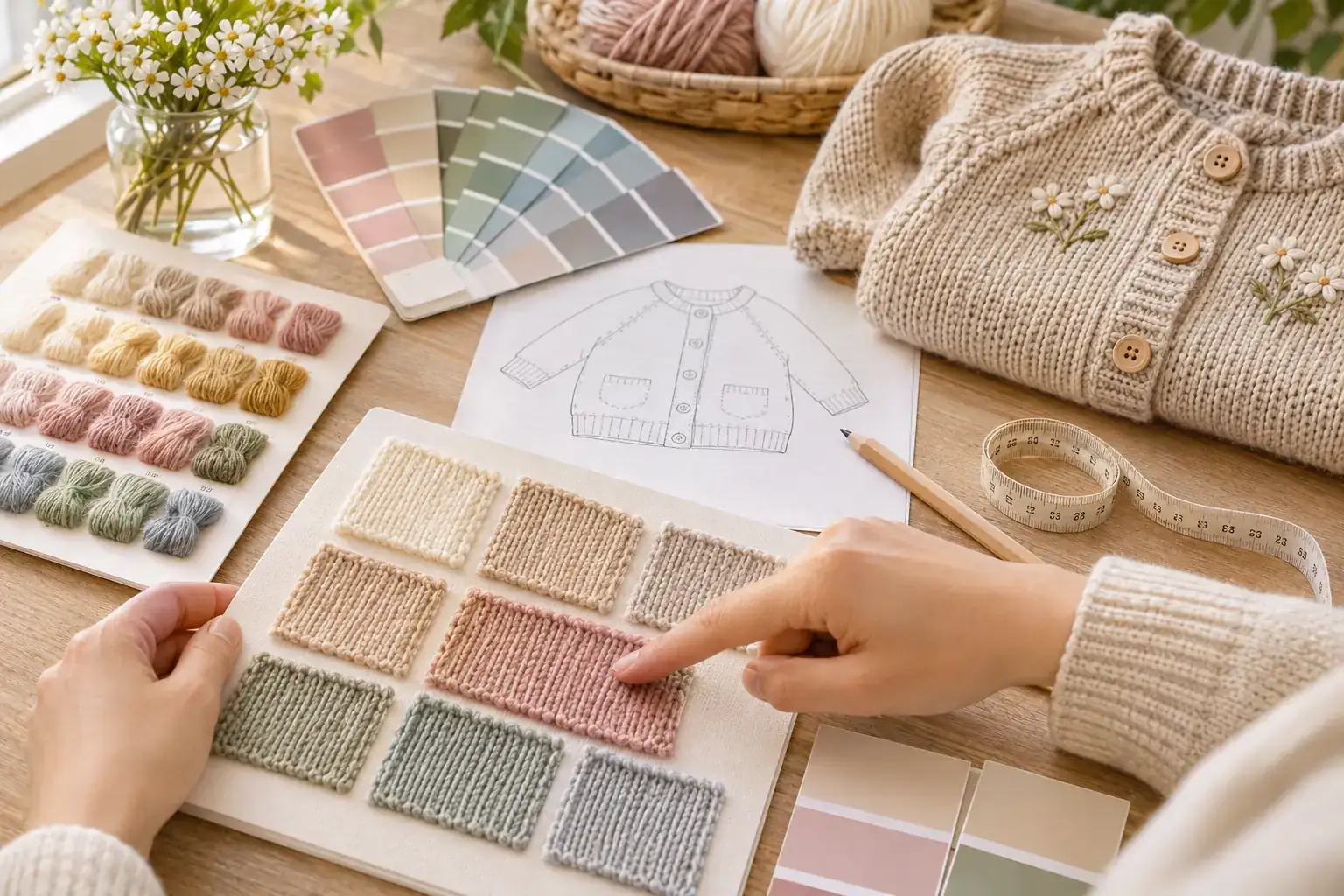
To find a reliable baby knitwear manufacturer, shortlist factories that specialise in children's knitwear, confirm they knit in-house, request samples in your exact yarn, check safety-testing capability (CPSIA, EN 71-3, REACH) and start with a small first order of around 100 pieces per style.
1. Look for a specialist, not a generalist
Baby knitwear is a narrow category. Seams, buttons, neck openings and yarn choice all have to work for newborn skin and for safety rules. A factory that also makes adult hoodies and jeans may not have the right patterns or testing habits. Ask how much of their output is children's knitwear and request photos of current production.
2. Confirm what is done in-house
Knitting, linking, washing, embroidery and hand-finishing are separate steps. Ask which steps happen in the same facility and which are subcontracted. More steps in-house usually means better control of colour, measurements and lead times.
3. Ask the right questions before sampling
- What is the MOQ per style and per colour?
- Which gauges do you knit (for example 7GG for chunky, 12GG for fine knits)?
- How long does a sample take, and how much does it cost?
- Can you source organic or certified yarn?
- Which lab do you use for CPSIA, EN 71-3 or REACH tests?
4. Sample in your real yarn and size chart
A sample knitted in a substitute yarn tells you little. Ask for lab dips first, approve the colour, then sample in the production yarn using your own size chart. Wash the sample at home three times and measure it again to check shrinkage and pilling.
5. Check safety details on the sample
Pull every button and snap. Look at the inside seams: they should be linked or flat, never scratchy. Check that the neck stretches comfortably over a baby's head. For under-3 products, avoid small detachable parts and drawstrings near the neck.
6. Start small, then scale
A good partner will accept a first order of around 100 pieces per style so you can test the market. Agree a written specification sheet, a pre-production sample and an inspection before the balance payment.
Key takeaways
Choose a children's knitwear specialist, verify what is made in-house, sample in your real yarn, test safety details yourself and start with a small order. That process filters out most sourcing risks before you spend serious money.
Keep reading